

A survey done of renal fellows training during the pandemic has now been published.
The link is here https://data.asn-online.org/reports/fs_21/
Some key take home messages of this overall positive survey on our field.
1. Over 80% of fellows felt their program had successfully maintained education and conferences via video and over 80% felt that they were ready for independent practice.
2. Over 80% of fellows saw patients virtually as outpatients and a small number during the inpatient rotations.
3. Burnout was high though during the pandemic ( women more than men)
4. Overall employment perceptions improved from years prior
5. More fellows RECOMMENDED nephrology as a field this time around( the silver lining of the pandemic)
6. Where are fellows going? Nearly 90% start a clinical position, and 2% or so did general internal medicine. Remaining were industry, other fields and joint fields with nephrology
7. Median starting salary was 200,000 US$. Interestingly, IMGs got a higher base pay compared to USMGs. NO difference in female vs male salaries( a big win for Nephrology)

9. Most fellows chose nephrology during residency. Sadly only 6% want to do a career in research.

As we wish everyone Happy New Year in 2022, the year has not really started off happy for many in the NY area( or most of the United States and the world). Omicron variant is flourishing over mankind.
In March 2020, I had witnessed one of the most horrific moments of my career and life as we all saw death and sobering misery in NYC. But at the same time, human kind and all health care had a mission and calling to somehow combat this virus.
2 years later now Jan 2022, we are back in a similar situation. I was on service in early Dec 2021 and life was "covid" normal with mostly non covid admissions and a good mix of interesting nephrology consult cases. Conferences were hybrid and we were doing relatively ok.
Fast forward 3 weeks, and life has changed again. More COVID19 patients in the hospital, some sick, some not. More PPE again.. cafeterias restricting folks on eating, visiting not allowed, people scared again to talk to each other. This time around, there is less fear but more fatigue. This time around, there is sickness but not fear of death. There is more disruption. Disruption everywhere...
This wave is different. I call it the wave of disruption. More nurses, PA, NP, physicians are out and coverage and planning for coverage is challenging. Luckily most have mild symptoms and are returning to work. This wave is causing more cancellations due to disruptions and not due to fear. This wave is causing more delay in health care due to personnel out due to mild covid symptoms or a positive PCR than sickness.
This wave is different as there are more incidental PCR positive findings in both inpatient and outpatient world and we are testing so frequently. The patient who comes in for a fall and femur fracture by chance is found to have PCR + in the ER. This wave is not the SOB, DOE coming in with oxygen requirements for acute COVID. Don't get me wrong, there are some who are coming in with that as well.
This wave is different, it's the wave of " We know COVID treatment better". We know steroids and remdesivir work and avoid intubation if not necessary and we are doing it.. We are doing an amazing job discharging patients and keeping death rates low.. This wave is more disruptive and harm will happen due to shortened and shrinking staff in health care.
This wave is different as there is minimal to no AKI. There is less lung involvement and hence less AKI ( perhaps). Early treatment maybe making a difference. Most of this wave is going to be outpatient phone calls from dialysis units, transplant patients turning positive and what do we do... Most of the phone calls I am receiving are from patients turning positive either because they tested for a trip or have mild symptoms. This will overwhelm the outpatient practices. Virtual visits are back to decrease the disruption again.. This wave will cause dialysis patient placement issues. Cohorts and special units may be possible in 2020 and 2021 but this wave, omicron is everywhere-- perhaps cohort the non COVID ones maybe a better option.
Phone calls from patients, friends, co-workers and family members are constantly telling me- I am positive. Omicron seems inescapable. This variant is everywhere.. NY is again an epicenter for this wave and leading the front in the US( not a proud moment). And this is despite our vaccination rates.
While, this Jan 2022 seems gloom and doom, we have achieved so much in the last 2 years.
Vaccination in record time for almost all age groups, preventing severe cases and death; RCTs showing how some medications and therapies work well such as steroids and perhaps in some cases remdesivir. We have learnt Acute PD again, we have learnt to juggle immunosuppression for GNs and transplant patients. We have learnt to transplant in a pandemic. We have learnt to multi task and do hospitalist work again. Despite the anger and distress in the world, we have learnt to become more human again and help each other more.
While I am not a trained immunologist, I am hoping that Omicron stays mild and takes over Delta and Delta won't have any human hosts left and this would be a silver lining and perhaps an end to the pandemic. With so many people infected ( despite vaccination), endemic status maybe in sight..
Let's hope that 2022 is the year of mankind and not the virus!
Check out the latest update in 2021 of treatment of ANCA vasculitis at KDIGO
1. Kidney biopsy is highly recommended in most cases
2. For induction- they recommend that steroids in combination with cyclophosphamide or rituximab be used for new onset AAV.


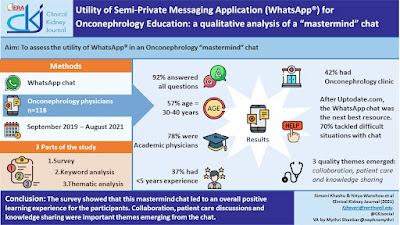

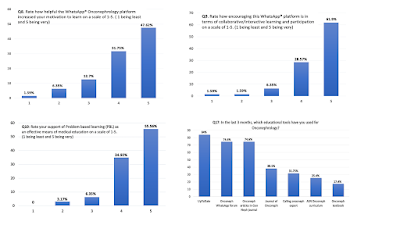
Our manuscript Utility of WhatsApp® for onconeph education is out @CKJsocial @kdjhaveri @Sebi_Lapman , authored by 2 phenomenal students Simoni Khashi and Nitya Wanchoo, Quality analysis done by Kayla Kinuf @HofstraU @HofstraKidney @UCKidney @uofcincy @UCincyMedicine Tweetorial pic.twitter.com/ll46aCv7x2
— Prakash Gudsoorkar MD, FASN, FNKF (@prakashneph) December 16, 2021
Selective estrogen receptor inhibitors and aromatase inhibitors are the mainstay of therapy for hormonal receptor-positive (HR+) breast cancer; however, most metastatic HR+, human epidermal growth factor receptor 2-negative (HER2-) progress and acquire resistance to endocrine therapies. Cyclin-dependent kinase 4/6 inhibitors (CDK4/6 inhibitors) comprise a new class of drugs that overcome this resistance. Three CDK4/6 inhibitors—palbociclib, ribociclib, and abemaciclib—have been approved for HER2-negative metastatic breast cancers, usually in combination with hormone therapy.


Interestingly, the renal community has seen elevated serum creatinine associated with these agents. Several early trials of palbociclib and ribociclib did not describe the incidence of AKI, whereas clinical trials of abemaciclib have reported that up to 25% of patients experienced a rise in creatinine. In vitro studies of abemaciclib have shown that the drug and its major metabolites inhibit renal transporters like organic cation transporter-2, multidrug and toxin extrusion-1 (MATE-1), and MATE2-K, potentially leading to a reversible rise in creatinine without actually changing GFR. Cases have been described that show this pseudo-AKI.
More recently, biopsy proven cases of acute tubular injury also have been noted- 6 cases with tubular and interstitial damage.
Finally, a search of the FAERs database revealed that, in addition to AKI, metabolic disturbances like hypokalemia, hyponatremia, and hypocalcemia may occur while on CDK4/6 inhibitors. Hyponatremia has been reported with ribociclib and with abemaciclib and grade 2 hypokalemia was reported in 20.8% of patients taking abemaciclib.
In summary, the common renal associations with CDK4/6 inhibitors are
Pseudo AKI, ATI, hyponatremia, hypokalemia and hypocalcemia

