Showing posts with label cardiac surgery. Show all posts

Thursday, September 12, 2019

Topic Discussion: Do Renal consultations matter in surgical and cardiac ICU patients


AHA moment arrived when I saw this article in AJKD on interdisciplinary collaboration of nephrology with surgical and cardiac surgery ICUs. It was a qualitative study highlighting some of the conversations that happen in the CTICU with the nephrologists and what is “felt” about renal consultations.
This is an important topic that we encounter as consultants. Often, we get urgent calls from the ICU, for example CTICU , “ Doc, we need an urgent consult, this patient post CABG is oliguric now and crt rose from 1 to 1.4mg/dl and we need urgent CRRT, and we placed the dialysis catheter already for you…”
Now this situation is not uncommon… how does one respond to that..
Either you say, “ gee. Thanks for that and I will come evaluate and decide if I even need to use that catheter as they might not need dialysis..”  What is the role of the Nephrologist in some of the surgical run ICUs.? Are we seen merely as technicians or truly thoughtful physicians that make decisions that will or not alter the care of the patient..
The article really highlights this very important issue. Some of the major themes highlighted are listed below
1.      There was almost an absent influence of renal decisions in some of the surgical and CTICUs; this stemmed from many surgeons and intensivists not sure of the renal fellows decisions not going along with attending nephrologists decisions. In my opinion, many times and at many centers-they bypass fellow based consult services and call attendings only for that reason.
2.      Nephrology fellows and attendings found it hard to communicate to CTICU staff as the PA or NP would not really be making that decision and the final decision came from the surgical head of that patient ( who often is not in the unit)
3.      Nephrology fellows might not realize the hierarchy noted in some of the surgically based ICUs compared to MICUs.  This is interesting as the first time we encounter surgical culture in depth is during renal fellowship( 3 years in medicine- we usually are kept away from SICU, CTICU and NSICU)
4.      What I found totally astonishing was one of the comments made in box 2 by an NP that was interviewed is that “renal was the only service we had to call to get something done as We can’t just order dialysis” – and hence making us seem like just a dialysis ordering physician
5.      It also goes into details on who manages the fluid removal once CRRT has been started. It is an ongoing battle. Often this leads to conflict and at many centers, Nephrologists have given up CRRT ordering and management to ICU intensivists( sad but true)
6.      Due to our consult note and recommendations have no value- many times- there was early signing off of the consult- as “ if they are not listening to our recommendations anyway – why bother writing a note everyday…” Not uncommon to see in this unit.
7.      While Nephrologists thought they were best valued to understand AKI and noted a good nephrologist is a good internist. Meanwhile, surgical staff didn’t believe that and felt nephrologists were mostly dialysis gatekeepers and didn’t feel we understood AKI in the overall ICU status and ordering tests of diagnostic significance were not very valuable.
8.      The role of nephrologists being dialysis proceduralist clashed nephrologists value of preventive medicine mainly in the CTICU. From a surgical perspective, a consultation that doesn’t offer any valuable intervention such as dialysis to help the acutely ill patient is useless. – heard that one before many times
9.      The most common disagreements were on when to do dialysis, timing of initiation and managing fluids—the most common we see in practice anyway. It is not uncommon where I have written “ stop diuretics” but they are continued and then days later I am starting them on RRT.  But there have been also times where I have said “ stop diuretics” and they continued and they did better by not listening to me.  So in general, does our opinion matter?
10.   Interesting, surgical and CT ICU staff viewed dialysis as a tool to get rid of the kidney problem whereas we see it as a last resort before trying all medical maneuvers.  One comment was really funny, In box 3, one of the nephrologists interviewed said “ they view most of us as technicians. Just like anesthesia can just put the person to sleep, just put a tube and no big deal- anyone can do it, you can slap someone on dialysis, no big deal.”.  My favorite one I get called is “ can you come and spin him”
11.   Finally, due to history of these interactions, nephrologists and nephrology fellows avoided the controversial issues. Many times, this led to resignations from the case.
12.   Lot of these changes are due to different medicine vs surgical cultures.

How do we fix this? Can we fix this? The authors describe this is discipline siloing leading to ineffective collaboration amongst fields of medicine. This is important to break and learn. This will be critical as it can harm patients if gets escalated and neglect ensues. We need to understand the other persons perspective and realize that all physicians have one medical school, residency and fellowship—we all bring in some value to the patient. We need to respect and honor each other’s fields of medicine.
When I showed this article to one of our CT surgeons, his/her reaction was merely to dismiss it. My fellow and I were hoping for more of a conversation to improve this encounter.
Then the next day, in the CTICU, we see that the curtains are closed and one of the rooms was having open heart surgery happening in the middle of the ICU – for an urgent mater.  We were just amazed at the life saving nature of their field in medicine… it is just amazing what they can do. And I told my fellow, “ if they can make the ICU bed an OR instantly, their assumption is that dialysis can happen instantly and at any place- even in the OR..” We have to understand that they come from a different perspective.  Once we start understanding that, we may be more welcoming of their way of thinking. Similarly, at some point, perhaps they can understand our physiological approach to certain things and preventive nature of AKI and that dialysis is a procedure and not the first thing we should be doing..”


Monday, November 6, 2017

TOPIC Discussion: LVAD and the Kidney


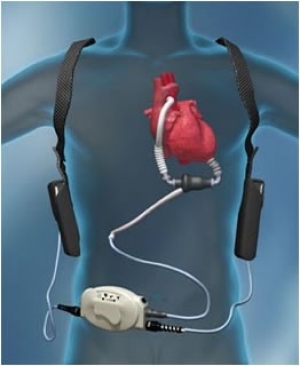
Left ventricular assist devices (LVADs) are common and implantation carries risk of AKI. LVADs are used as a bridge to heart transplantation or as destination therapy. Patients with refractory heart failure that develop chronic cardiorenal syndrome and CKD often improve after LVAD placement. Nevertheless, reversibility of CKD is hard to predict. After LVAD placement, significant GFR increases may be followed by a late return to near baseline GFR levels, and in some patients, a decline in GFR.
In a recent review in CJASN, we discuss changes in GFR after LVAD placement, the incidence of AKI and associated mortality after LVAD placement, the management of AKI requiring RRT, and lastly, we review salient features about cardiorenal syndrome learned from the LVAD experience.


Salient points   

Most of the AKI and CKD post LVAD is related to right ventricular failure. Identifying that and providing aggressive diuresis and or UF might be important.
Long term CKD related to LVAD might be related to hemolysis and R-CHF.
Hemodialysis and PD – both can be successfully be done in outpatient setting with LVADs
AVF should be still the first choice for LVAD patients in the outpatient settings that require dialysis e
The most important of all, interdisciplinary teams including cardiologist, surgeons, and nephrologists are critical in the success of an LVAD program.

Tuesday, October 25, 2016

Topic Discussion: AKI following LVAD


Image result for LVADLeft ventricular assist devices (LVADs) are used increasingly as a bridge to transplantation or as destination therapy in end-stage heart failure patients who do not respond to optimal medical therapy. Many of these patients have end-organ dysfunction, including advanced kidney dysfunction, before and after LVAD implantation. Kidney dysfunction is a marker of adverse outcomes, such as increased morbidity and mortality.The incidence of AKI after LVAD implantation varies considerably: between 4 and 38 %. 


Risk factors:
INTERMACS score 1 or 2 ( http://content.onlinejacc.org/article.aspx?articleid=1143100)
Kidney <10 cm in size
Older age
ACE-I or ARB therapy immediately prior to surgery
High central venous pressure
Low LV end-diastolic dimensions
Long CPB time
Higher intraop bleeding
Need for re operation
Sepsis
Liver dysfunction
Need for blood transfusions
RV failure
CKD

Factors such as acute blood loss, volume shifts, arrhythmias, and the effect of multiple vasoactive medications influence renal hemodynamics. The sudden change in renal blood flow characteristics due to continuous flow-LVAD support can lead to AKI. Patients with preoperative RV failure and patients with INTERMACS scores of 1 or 2 are at higher risk of AKI.  The RV function is of vital importance after LVAD placement since postoperative RV failure and idioventricular arrhythmias have been associated with AKI . An RV dysfunction can result in a reduced LV preload, low LVAD speeds, reduced forward flow, increased arrhythmias, and liver as well as kidney congestion.

It appears that the cause is hemodynamic vs ATN. No study has really defined the mechanism. Given the LVAD devices have pro thrombotic risk , renal vascular thrombosis and or anticoagulation related AKI should be in the differential. As always, AIN from any medication is to be considered. Hemolysis related injury could be leading to pigment nephropathy as well.

https://www.ncbi.nlm.nih.gov/pubmed/25759700

https://www.ncbi.nlm.nih.gov/pubmed/25796403

Sunday, May 31, 2015

IN THE NEWS: Remote ischemic preconditioning and prevention of AKI post CABG


Remote ischemic preconditioning(RIPC)  has been used as a protective method from ischemic damage to distant organs.  Application of one or more brief cycles of nonlethal ischemia/reperfusion to an organ or tissue may protect a remote organ or tissue from a sustained episode of lethal ischemia/reperfusion.
In a recent study presented at Europe and published in JAMA,  Zarbock et al examine the effects of RIPC on the rate and severity of AKI in patients undergoing cardiac surgery. In a multicenter trial, 240 patients at high risk for AKI  were randomized to receive either RIPC  or sham control  after induction of anesthesia.

The amazing results showed that AKI was significantly reduced with RIPC (45/120; 37.5%) compared with control (63/120; 52.5%), with an absolute risk reduction (ARR) of 15%. Fewer patients received RRT after RIPC (7 [5.8%] vs 19 control [15.8%]; ARR, 10%) and RIPC reduced intensive care unit stay (3 vs 4 days). RIPC had no significant effect on myocardial infarction, stroke, or mortality.

A recent meta-analysis published in AJKD showed otherwise.  Mostly randomized trials were included ( 13) and total of >1300 patients. There was no differences in levels of post operative AKI and incidence of RRT, in hospital mortality and hospital stay.  A prior meta-analysis had shown similar results as well.

Can we start using this in clinical practice? It is innovative, inexpensive and easily possible.  But long terms risks and harms are not known. Clearly, there is significant risk of AKI post CABG and this might be the only preventive measure that we have that has come close to showing any benefit. 

As suggested by the editorial in JAMA, before RIPC is adopted for clinical use, the potential risks and adverse effects must be considered carefully.  

image source: circres.ahajournals.org

Thursday, April 9, 2015

Blood Transfusions and AKI following CABG: Does age of PRBCs matter?


Blood transfusions have been linked with risk of AKI following cardiac surgery. Anemia and number of PRBCs transfusion are independent risk factors for development of AKI post CABG, Catalytic iron can produce oxidative stress, surrogate for hypotension and a “sick patient” and age of PRBCs maybe the culprit? In addition, PRBCs have been linked with non renal adverse outcomes such as 16% increase risk of mortality post CABG, risk of sepsis and pneumonia and risk of increased length of intubation.
A recent study called RECESS trial just published in NEJM looked at the age of PRBCS and risk of outcomes following CABG. RECESS was a randomized trial at multiple sites from 2010 to 2014 looking at patients 12 years of age or older who had complex cardiac surgery and were likely to undergo transfusion of red cells were randomly assigned to receive leukocyte-reduced red cells stored for 10 days or less (shorter-term storage group) or for 21 days or more (longer-term storage group) for all intraoperative and postoperative transfusions.
The primary outcome was the change in Multiple Organ Dysfunction Score (MODS; range, 0 to 24, with higher scores indicating more severe organ dysfunction) from the preoperative score to the highest composite score through day 7 or the time of death or discharge.Overall results showed that the duration of PRBCS storage was not associated with MODS events. In addition, adverse events did not differ significantly between groups except that hyperbilirubinemia was more common in the longer-term storage group.
What about renal outcomes? In the supplementary sections, the renal outcomes are mentioned and there was no difference in both arms. Serious renal adverse events in both arms were also similar. So AKI risk might still exist due to PRBCs transfusion risk but it’s not due to the age of the PRBCS. 

Tuesday, April 7, 2015

All Posts

Search This Blog