Showing posts with label BK virus. Show all posts

Saturday, September 23, 2023

Consult Rounds: BK in non renal solid organ transplantation

What is the incidence of BK viremia, and BK Nephropathy in non renal solid organ transplants?

Not much that I could find in the literature.
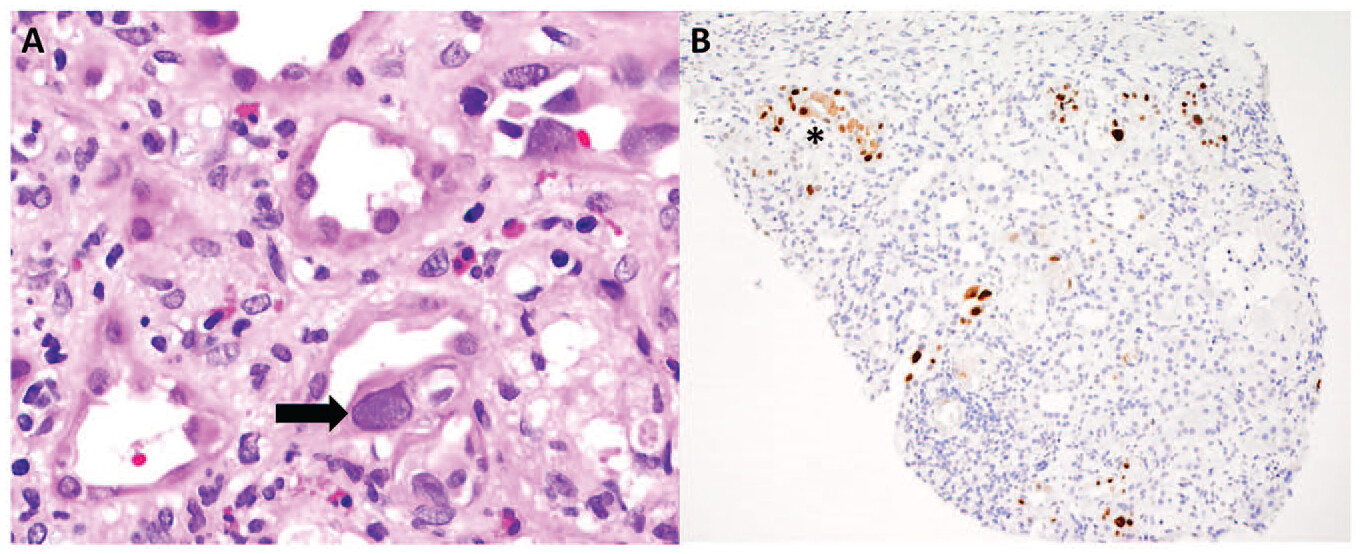


In this retrospective study from 2021, the authors investigated the clinical characteristics, pathological findings, and outcomes of BK viremia and nephropathy in non-renal solid organ transplant patients (NRSOT) who sought nephrology consultation over a five-year period. Among liver, heart, and lung transplant recipients referred to Nephrology, 14% were diagnosed with BK viremia, with a median peak serum BK viral load of 35,500 copies/ml (ranging from 250 to 21,100,000 copies/ml). Notably, BK viremia resolved in six out of seventeen patients (35%), but four out of five biopsied patients exhibited BK virus (BKV) nephropathy. Furthermore, eleven out of the seventeen patients with BK viremia progressed to advanced stages (stage 4 or 5) of chronic kidney disease. Additionally, four patients experienced rejection of their solid organ transplant within the first year following the detection of BK viremia after reducing immunosuppressive treatments. This may be a sign of just net immunosuppression.

Another study back in 2019 had looked at literature systematically on report of BK disease in native kidneys. In their review at that time, in heart transplant recipients, 13 cases of BKV nephropathy had been reported, with most occurring in males (10 out of 13), and the mean age being 36.6 years. In lung transplant patients, six cases of BKV nephropathy were identified, with a mean diagnosis age of 47.3 years. Only one case of BKV nephropathy was reported in a liver transplant recipient, and one in a pancreas transplant recipient. More have been reported since their report. The average time from transplant to BKV nephropathy diagnosis in the solid organ transplant population was 2.88 years. For patients who had undergone hematopoietic cell transplantation (HSCT), 19 cases of BKV nephropathy were found, with a mean diagnosis age of 30.6 years. In cases with demographic information, 58% were males, and half of these patients required renal replacement therapy, with a mortality rate of 63.2%. Ten cases of BKV nephropathy were reported in the context of hematologic malignancies, with an average time from malignancy diagnosis to BKV nephropathy diagnosis of 3.06 years. Ten cases of BKV nephropathy were reported in HIV-infected patients, all in males, with a mean age of 34.5 years. Three of these patients required renal replacement therapy, and mortality at the time of publication was 30%. Additionally, individual cases of BKV nephropathy were described in various other clinical settings, such as rheumatoid arthritis, Hyper IgM immunodeficiency syndrome, pulmonary tuberculosis, diabetes mellitus, prostate cancer, and an immunocompromised patient with an unclear medical history. This is fascinating to note that this entity has been ignored in the recent non renal transplant literature. 

In a meta-analysis evaluating the frequency and risk factors for BK viruria and viremia in NRSOT patients, Viswesh et al found a relatively high rate of viruria (8%-52%) but infrequent progression to viremia (3%-7%) and BKV nephropathy (1 biopsy-proven case in an heart transplant recipient). Among those NRSOT patients who did have progression to viremia and BKV nephropathy, heart transplants patients represented the majority of cases. This finding might be due to the proposed “double-hit” hypothesis, which suggests that the cumulative insult of immunosuppression and renal hypoperfusion secondary to cardiac allograft dysfunction causes clinical progression to BKV nephropathy.  

Should implementing a systematic BK screening program could effectively identify and manage this issue in the NRSOT population and or HCT patients?

Wednesday, February 25, 2015

Risk factors for BK virus infection post transplantation


Transplant related risk

1.       Acute rejection episodes
2.       Cold ischemia time( the longer the more likely)
3.       Delayed graft function
4.       Ureteral stent placement
5.       Thymoglobulin induction
6.       Tacro/ MMF based regimen

Recipient related risk
1.       Older age
2.       Male
3.       Non African American
4.       DMII

Donor related risk ( now this is fascinating)
1.       BK Virus + donor
2.       Degree  of HLA mismatch
3.       HLA C7

Apparently there is growing evidence that the donor kidney might be the source of the BK virus.  Pre- transplant BK Screening of donors might identify the risked recipients post transplant.  Recipients of BK + donors developed BK viremia at earlier transplant time-points, had higher viral loads and slower clearing of the virus.  Even a recent study provides more evidence of this concept.

Overall, a nice review of BK Nephropathy was just published in NDT, where these risk factors are summarized.

Tuesday, November 12, 2013

Is BK Virus oncogenic?

EBV virus has been associated with PTLD and many other viruses have oncogenic potential. Does a common urological virus such as BK have oncogenic potential in our transplant patients?    
Given its predilection to lower GU tract, cancers of bladder have been reported with BK( just case reports). In the tumor cells, it is possible to detect fragments of the viral genome that could alter the control mechanisms of the cell cycle and DNA repair.

Besides the correlation between BKVN and graft failure, a small number of case reports suggest an association between BKV infection and the development of renal and bladder cancers in renal transplant recipients. Indeed, for more than 30 years, an oncogenic potential of BKV has been observed in vitro and in animal models. In humans, however, the implication of BKV in tumor development is still unclear.

A table in a recent publication summarizes some of the cases.
http://www.ncbi.nlm.nih.gov/pmc/articles/PMC3482068/table/T1/


Interestingly, Lithium has been associated with collecting duct carcinomas due to the mode of it’s action. At ASN this year, the pathologist presented a case of collecting duct cancer in a transplanted kidney in  a patient who was on Lithium and had persistent BK nephropathy. The biopsy showed a tumor burden as well significant BK virus staining. Talk about second hits!

Tuesday, March 19, 2013

BK nephritis in the non renal transplant setting

BK nephropathy got it's fame in kidney transplantation. Why can't this entity exist in native kidneys?
While reports have been seen following stem cell transplantation, no study had looked at this question till recently. A recent study in NDT presents 8 cases of BK nephritis in a native kidney setting.

The settings were:

1. HSCT
2. TB
3. Other hematologic malignancies
4. lung transplantation

What is interesting is that HIV patients don't get BK? Or there are scare reports. One study did find that HIV patients do shed BK virus. But most studies have found that they don't co exist. Some have suggested that they share the same co receptor.  Why don't we get full blown BK nephritis in this setting?- is it the altered immune setting or is it the one of the HAART meds that are protective ( and potentially a treatment for BK). Here is one case report in the literature.

Thursday, October 27, 2011

Topic Discussion: Re transplantation after BK Nephropathy

A recent paper in Transplantation ( multi institutional) looked at this exact question. How safe and well do patients when they get a re transplantation of the kidney after failed prior transplant from BK Nephropathy.
This retrospective study evaluated 31 patients from 6 centers.  26/31 had documented clearance of viremia and 13 underwent transplant nephrectomy before the new transplant.  Only 2 patients in the new transplants got BK nephropathy.  7/31 had acute rejection.  The patients who had BK viremia and replications had higher 1 year creatinine.  One graft was lost due to rejection. But overall, majority did well. Based on this small trial, the authors conclude that re transplantation is safe and effective for patients with prior graft loss due to BK Nephropathy but preferably post BK viral clearance.


Take a look at the full article at:
http://www.ncbi.nlm.nih.gov/pubmed/21836535

Friday, September 17, 2010

Concept Map of Treatment of BK Nephritis


Here is a concept map of BK Nephritis Pathology and Treatment options

Sunday, September 12, 2010

Can BK Virus serum PCR be a good marker for Net immunosuppression?


In the field of transplantation, we are struggling to figure out is the patient on which end of the spectrum, too little immunosuppresion or too much immunosuppression.  Markers for rejection have been studied extensively and based on Luminex DSA one can monitor early signs of impending antibody rejection.  But many centers are also developing aggressive screening strategies for BK Nephritis.  This entity is usually seen as early as 2 weeks post transplant to as late as 7 years post transplant but usually in the first year or so.


I think that A BK serum PCR might be a good marker for NET immunosuppression. Someone who has lupus and has been treated with Cytoxan, Cellcept, Rituxan and has failed kidneys recently and then gets a transplant for the kidney and gets inducted with more immunosuppression might be the highest risk for BK Nephritis much earlier on due to their NET immunosuppresion being the highest. No one can really measure NET immunsuppression.  There is a test available called " Cylex" or ImmuKnow . This  is the physiology behind it:  
"Phytohemagglutinin (PHA) is a non‐specific mitogen which can be used to stimulate cell division in CD4 T‐ lymphocytes regardless of their antigenic specificity or memory status. Therefore, PHA is considered to be a “global” stimulator of the immune system. The production of intracellular ATP is one of the first steps in cellular activation following stimulation with mitogens such as PHA.  ATP is a multifunctional nucleotide which plays an indispensible role in the transfer of intracellular chemical energy. The amount of ATP generated can tell us the amount of CD4 T cell activation and the overall immune status of the patient( over or under immunosuppressed). " -from the cylex website( summarized) 

But a cell activation can occur in setting on an infection as well and a similar down stream effect on the kidney. Steady monitoring of infectious agents like BKV might be the BEST marker we have to date to tell us " Hey there is too much immunosuppression on board" !
But might not be as simple as that...


Lets see what future studies hold...


Cidofivir for BK Nephritis

 As we all know that treatment for BK Nephritis is tough. The only thing that really works well is Decreasing immunosuppresion. But as we do that, the risk of mounting an immune response arises and you can start seeing biopsies that look like Acute Cellular Rejection and BK staining Positive.
At that time, most people will treat with IV Immunoglobulins and see if there is some response in terms of preventing rejection and treating BK at the same time.
So far, no drug has directly targeted BK except Cidofivir. Cidofovir is an antiviral agent that demonstrates in vitro activity against murine polyomavirus and has been proposed for treatment of BKVN in renal allograft recipients. The dose usually recommended is 0.25mg/kg IV every 2 weeks for 8 doses total. This is a low dose and can be used for someone in already some graft dysfunction as cidofivir itself can causing ATN like injury( same as tenofivir). This low-dose cidofovir may be tolerated, even among renal transplant recipients with significant renal dysfunction due to BKVN. Prospective, controlled trials are warranted to further define the optimal dose, toxicity and potential role of cidofovir in renal transplant recipients with BK virus nephropathy.


http://www.ncbi.nlm.nih.gov/pubmed/18380832
http://www.ncbi.nlm.nih.gov/pubmed/16499584

Wednesday, August 11, 2010

BKV viral protein-1 mRNA in urinary cells

A noninvasive, accurate biomarker for diagnosis of BKVN is being sought. Recent article in Transplantation reports using the urinary cell mRNA profile at the time of BK Nephropathy diagnosis and compared to risk of graft function.
BK Nephropathy was diagnosed with a sensitivity of 100% and specificity of 97% using the urinary mRNA. Levels of granzyme B (GB) mRNA and proteinase inhibitor (PI)-9 mRNA in urinary cells were higher in BKV patients with a subsequent decline in renal function compared with patients with stable function, and were positively associated with rise in serum creatinine from the time of BK diagnosis to 12 months after diagnosis. 
This confirms the fact that urinary granzyme B and PI-9 could be used as markers of inflammation during any renal episode post transplant. Similar findings were seen in rejection as well. It seems that no matter what causes the inflammation, BK or rejection, a rise in urinary GB and PI-9 suggests a poor prognosis.  

Reference:

Wednesday, July 14, 2010

Leflunomide and liver failure

The FDA just expanded the black box warning on leflunomide( ARAVA), a drug that is sometimes used to treat BK Nephritis in Transplant patients. A recent report showed 49 cases of severe liver toxicity from 2002-2009. Usually the reactions were noted in the first 12 months post use of the drug.  The greatest risk occurred in patients taking other drugs that may cause liver damage while taking leflunomide and in patients with preexisting liver disease. 

This comes as a shock to some of us in the transplant community as we do use this medication for treatment of BK Nephritis. There is so little in the form of treatment available for BK, this black box warning might make leflunomide not a very user friendly drug anymore. 


All Posts

Search This Blog