Showing posts with label AKI. Show all posts

Saturday, May 16, 2026

Consult Rounds: Histotripsy associated AKI


Histotripsy is an emerging non-invasive, non-thermal ablative technology that uses focused ultrasound pulses to mechanically destroy tumors through acoustic cavitation. Approved by the FDA in late 2023 for treatment of liver tumors, histotripsy has generated excitement because it can fragment tissue without surgical incisions, ionizing radiation, or traditional thermal injury. Early studies have also suggested potential downstream immunomodulatory effects beyond localized tumor destruction.

During the procedure, patients typically undergo general anesthesia in an interventional radiology suite or hybrid operating room. Real-time ultrasound guidance is used to localize the lesion and define the treatment field. High-amplitude ultrasound pulses generate dense cavitation bubble clouds that rapidly expand and collapse, mechanically fractionating tissue into acellular debris while largely sparing surrounding structures. Treatment is delivered sequentially in a raster-like pattern across the lesion with continuous imaging feedback.( see above figure created via AI)

While the oncology potential of histotripsy is substantial, nephrologists should be aware of a possible emerging complication: histotripsy-associated acute kidney injury (H-AKI). In a recent brief report published in KI Reports, a patient developed AKI with hematuria shortly after hepatic histotripsy in the absence of alternative clear insults, with improvement following hydration and supportive care.

To further explore whether this represented an isolated event or a broader signal, post-marketing review of the FDA MAUDE database identified additional cases of renal impairment following hepatic histotripsy. Reported patients were often older females with larger treatment volumes (>90 cc). Some required dialysis, while others recovered with conservative management and intravenous fluids. However, MAUDE data remain hypothesis-generating and limited by underreporting, lack of adjudication, and incomplete clinical detail.

Additional support for this phenomenon comes from an abstract presented at the Society of Interventional Radiology describing multiple cases of histotripsy-induced AKI. Interestingly, several reports described dark or discolored urine, raising the possibility of pigment-mediated tubular injury.

At present, no biopsy-proven mechanism has been reported. Proposed pathophysiologic mechanisms include hemolysis with pigment nephropathy, release of cellular debris after extensive tissue fractionation, hemodynamic injury, inflammatory cytokine release, or immune-mediated interstitial injury. Larger treatment fields may increase systemic exposure to hemoglobin, heme pigments, and intracellular contents.

Why does this matter? Histotripsy is rapidly expanding beyond hepatic tumors into renal and other solid organ malignancies. As use increases, nephrologists, oncologists, and interventional radiologists should recognize AKI as a potential procedural complication requiring early identification and supportive management. Future studies are needed to better define incidence, mechanisms, biomarkers, and preventive strategies for H-AKI.


Thursday, March 19, 2026

Perspective : Not All AKI in Cancer Is ATN: A Diagnostic Wake-Up Call

AKI is increasingly common in patients with cancer. Between sepsis, volume depletion, contrast exposure, and nephrotoxic therapies, it is often tempting—and convenient—to attribute kidney injury to acute tubular necrosis. 

But what if we are wrong more often than we think?

The Problem: Diagnostic Anchoring in Onconephrology

Cancer patients represent one of the most complex populations we manage. They are exposed to multiple therapies, experience rapid physiologic changes, and frequently have overlapping clinical syndromes. Despite this, many cases of AKI are still labeled as “ATN” early in the course, often without further evaluation. This diagnostic anchoring creates a critical blind spot—one that risks missing treatable and potentially reversible causes of kidney injury.

What Are We Missing?

Several important entities can mimic ATN in patients with cancer:

Immune checkpoint inhibitor–associated acute interstitial nephritis (AIN):
With the widespread use of PD-1, PD-L1, and CTLA-4 inhibitors, AIN is increasingly recognized. It is often delayed in onset, subtle in presentation, and highly responsive to corticosteroids. Without biopsy, it is frequently missed.

Thrombotic microangiopathy (TMA):
TMA can occur in association with VEGF inhibitors, hematologic malignancies, transplantation, and even cancer itself. Importantly, it may present without classic hematologic features. Complement-mediated mechanisms are increasingly implicated. Renal limited TMA is so common and often gets missed due to lack of heme parameters. 

Light chain–mediated kidney disease:
Cast nephropathy, light chain deposition disease, and other monoclonal protein–related injuries are not always immediately recognized, particularly outside specialized hematologic settings. Often this is missed in the setting of lymphoma and NON plasma cell based heme cancers. 

Drug-induced tubulointerstitial injury:
Proton pump inhibitors, antibiotics, and targeted cancer therapies can all contribute to kidney injury. These often coexist with immunotherapy, further complicating the clinical picture.

Non Dilated Obstruction:

This is definitely missed. We see this in Onconephrology all the time and especially in retroperitoneal mets cancers and or RP masses. Renal sonogram will show NO hydronephrosis but it is still hydronephrosis and b/l PCNs improve the renal function. 

Why This Matters

Multiple studies comparing clinical diagnoses with kidney biopsy findings have demonstrated significant discordance. A substantial proportion of cases initially presumed to be ATN are reclassified after biopsy—many into diagnoses that would change management.

Despite this, kidney biopsy is often deferred due to concerns about procedural risk, patient acuity, or the perception that it will not alter treatment decisions. Increasingly, however, that assumption does not hold true.

A Practical Framework: When to Pause and Reconsider

Before assigning a diagnosis of ATN in a patient with cancer, it is worth pausing and asking whether the full differential has been considered.

Red flags that should prompt further evaluation include:

  • Recent or ongoing immunotherapy

  • Exposure to VEGF inhibitors or novel targeted agents ( often most folks don't do a good detailed oncology history of meds)

  • Underlying or suspected hematologic malignancy

  • Lack of kidney recovery despite supportive care

  • Presence of proteinuria or active urine sediment

Key questions to consider:

  • Would identifying AIN change management (e.g., initiation of steroids)?

  • Could this represent TMA requiring targeted or complement-directed therapy?

  • Would a kidney biopsy meaningfully guide treatment decisions?

  • Would this patient benefit from PCN as clinically seems to have hydronephrosis but no signs on imaging?


In this setting, labeling AKI as “ATN” without careful consideration is no longer sufficient.


AKI in patients with cancer is often more than just ATN. It may reflect immune-mediated injury, complement dysregulation, or monoclonal protein–related disease.

Recognizing these possibilities is essential to delivering the right treatment at the right time.


How often are you performing kidney biopsies in patients with cancer and AKI?
Have biopsy findings changed your management in unexpected ways?
Are we underutilizing kidney biopsy in this population?

Monday, May 6, 2024

Topic Discussion: Pseudo AKI with anti cancer agents


Legend: AKI, acute kidney injury, MATE, multidrug and toxic compound extrusion; OAT, organic anion transporter; OCT, organic cation transporter

As of April 2024--most updated data on anti-cancer agents and Pseudo-AKI.

Several classes of cancer treatments are associated with pseudo-AKI.  Providers must be aware of this phenomenon, as pseudo-AKI can lead to temporary stopping and even permanent discontinuation of life-saving treatments. When patients present with increases in serum creatinine while on these drugs, checking a serum cystatin C level may help differentiate true AKI from pseudo-AKI.

Shruti Gupta and Kenar Jhaveri 


Saturday, March 30, 2024

Wednesday, December 27, 2023

Nephro- hospitalists?- should we consider this

Not much has been written regarding the role of a nephro-hospitalists in the Nephrology literature. There is one perspective back in 2019, before the pandemic that discusses the evolution of nephrology as a medical specialty and addresses the challenges it faces, particularly the declining interest among medical trainees in pursuing careers in nephrology. The authors emphasize the importance of adapting to these challenges and propose a solution in the form of a nephrology hospitalist model.

The field of nephrology has evolved significantly from its early focus on kidney physiology to becoming an independent clinical specialty, particularly with the introduction of dialysis in the 1960s. While patient care was initially delivered primarily in hospitals, the growing population of individuals with kidney disease led to a shift in care to outpatient settings, with a recent emphasis on subspecialized training in transplantation, interventional, and critical care nephrology.

The decline in interest among medical trainees in nephrology careers is attributed to various factors, including a lack of mentorship, the complexity of kidney physiology, busy workloads, perceived lower compensation, and a perceived lack of innovation in therapies and dialysis.

To address these challenges, the authors introduce the concept of a nephro-hospitalist model, exemplified by the experience at Washington University in St. Louis. The model involves a dedicated nephrology hospitalist service comprising attending physicians focusing on inpatient care and medical education. Medical students and rotating internal medicine residents are preferentially placed on this service, and the model includes a flexible schedule of alternating periods of service.

The benefits of this model include improved teaching and mentorship for trainees, increased elective time for fellows, and the opportunity for attending physicians to foster specific interests. The authors highlight the positive impact on education and mentorship, which is crucial for attracting trainees to nephrology.

However, the authors also acknowledge the downsides to the model, including the need for an every-other-month schedule to prevent burnout and potential limitations in attracting new trainees. Financially, the model is described as roughly break-even, and the authors note that financial considerations should be weighed against the educational benefits.

The paper discusses other institutions that have adopted similar models with varying success and mentions the potential role of nephrology hospitalists in private practices, particularly to mitigate issues related to "windshield time" and electronic health record systems.

What have other fields done

Check out this regarding the role of onco-hospitalists and cancer hospitals.
Other fields such as GI and Neurology as well have adopted this model. 

It is possible that a full-time hospital-based nephrology model can be a valuable addition to nephrology education, providing increased attending contact and mentorship for residents and medical students. We should consider further exploration of innovative models to expose trainees to the unique aspects and satisfactions of nephrology, ultimately aiming to address workforce challenges and recruit future nephrologists.

Tuesday, December 26, 2023

CMML and the Kidney


This figure summarizes the various glomerular, reno-vascular and tubulointerstital disorders seen with Chronic Myelomonocytic leukelmia ( recent review in Kidney Medicine by us)

Saturday, September 23, 2023

Concept Map: AKI in ECMO


Concept Map of pathophysiology related to AKI in a patient on ECMO- created by Dr. Purva Sharma using biorender.com 

Thursday, December 1, 2022

Concept Map: Acute Pancreatitis and AKI


Special post by 

Lakshmi Kannan, MBBS, MD, 

Department of Nephrology, Pikeville Medical Center

Adjunct Faculty, University of Pikeville Kentucky College of Osteopathic Medicine

Kentucky, USA

Reference is here

Tuesday, August 2, 2022

Concept Map: AKI in patients with Chronic Liver Disease


Concept map of AKI associated with chronic liver disease. Made using biorender.com 
Inspired by an article in CJASN

Monday, June 27, 2022

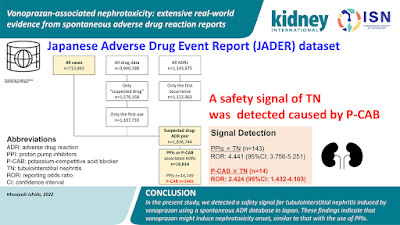
In the News: Vonoprazan and the Kidney

A new agent has been found to cause AKI and AIN—Vonoprazan.  A recent paper in Kidney International is the first to describe this from Japan. The authors used the National reporting database of drug toxicities in Japan to assess this and compared it to PPIs—JADER database.  See visual ab from the recent paper. 


What is vonoprazan? 

Vonoprazan, a potassium-competitive acid blocker possessing a new mechanism of action. Vonoprazan inhibits acid secretion in the cells of the gastric wall. The inhibitory effect of vonoprazan on H+, K+-ATPase is perhaps over 300 times greater than that of lansoprazole. 

In Japan, this drug was approved for use for acid reflux in 2015. In the US, this drug has been FDA approved for esophageal esophagitis in association with H pylori recently in May 2022.  A recent meta-analysis also found that vonoprazan is non inferior to PPIs as therapy for GERD but in the subgroup for severe erosive esophagitis- it was more effective.

In this recent study in KI, authors compared PPI related renal adverse events to this new agent. The total numbers of renal adverse events associated with PPIs and vonoprazan were 14149 and 2465, respectively. Surprisingly, a safety signal for vonoprazan and a drug associated AIN —was detected, which was similar to that obtained for PPI. Interestingly. a safety signal for AKI caused by PPIs and vonoprazan were not detected.

The mechanism of action of vonoprazan is that it competes with potassium ions for the reversible inhibition of H+- K+-ATPase, whereas PPIs act by binding covalently to the gastric H+, K+-ATPase via disulfide bonds.  Having a H+, K+-ATPASe in the kidney have any impact? Not sure?

Another interesting finding from another study showed increase tacrolimus levels when this agent is used- a caution in our GN and transplant patients.

As we learn more about this agent in the US, we need to be vigilant!

Friday, December 10, 2021

Topic Discussion: CDK4/6 inhibitors and the Kidney

Selective estrogen receptor inhibitors and aromatase inhibitors are the mainstay of therapy for hormonal receptor-positive (HR+) breast cancer; however, most metastatic HR+, human epidermal growth factor receptor 2-negative (HER2-) progress and acquire resistance to endocrine therapies. Cyclin-dependent kinase 4/6 inhibitors (CDK4/6 inhibitors) comprise a new class of drugs that overcome this resistance.  Three CDK4/6 inhibitors—palbociclib, ribociclib, and abemaciclib—have been approved for HER2-negative metastatic breast cancers, usually in combination with hormone therapy. 


Interestingly, the renal community has seen elevated serum creatinine associated with these agents. Several early trials of palbociclib and ribociclib did not describe the incidence of AKI, whereas clinical trials of abemaciclib have reported that up to 25% of patients experienced a rise in creatinine. In vitro studies of abemaciclib have shown that the drug and its major metabolites inhibit renal transporters like organic cation transporter-2, multidrug and toxin extrusion-1 (MATE-1), and MATE2-K, potentially leading to a reversible rise in creatinine without actually changing GFR. Cases have been described that show this pseudo-AKI. 

More recently, biopsy proven cases of acute tubular injury also have been noted- 6 cases with tubular and interstitial damage.

Finally, a search of the FAERs database revealed that, in addition to AKI, metabolic disturbances like hypokalemia, hyponatremia, and hypocalcemia may occur while on CDK4/6 inhibitors. Hyponatremia has been reported with ribociclib and with abemaciclib and grade 2 hypokalemia was reported in 20.8% of patients taking abemaciclib. 

In summary, the common renal associations with CDK4/6 inhibitors are

Pseudo AKI, ATI, hyponatremia, hypokalemia and hypocalcemia

Saturday, October 9, 2021

In the NEWS: Immunotherapy and the Kidney( new data in 2021)- AKI and electrolytes

Immune checkpoint inhibitors (ICI) are a novel class of immunotherapy drugs that have vastly improved cancer care for patients. Data on AKI has been evolving. 

In a multicenter international study just published in JITC by Gupta et al involving 30 sites across 10 countries, researchers collected data on 429 patients with ICI-AKI and 429 control patients who did not develop ICI-AKI. Armed with the largest ICI-AKI database to date, the team of researchers was able to identify predictors, recovery potential and survival outcomes of those patients with ICI-AKI.


One of the most important findings from the two-year study reveals that among patients who take ICI again – even after an episode of ICI-AKI – only 16.5 percent developed recurrent ICI-AKI, which shows that most patients can still take these life-saving medications safely.

Additional findings show that in renal-recovery occurs in approximately two-thirds of patients with ICI-AKI. Early treatment with corticosteroid is associated with a higher likelihood of renal recovery. Lower baseline kidney function, proton pump inhibitor use and extrarenal immune-related adverse events are independent risk factors for developing ICI-AKI.

A related paper recently published in the journal Kidney International by Wanchoo et al looking at the scope of electrolyte disorders that are seen with ICI. Hyponatremia, hypokalemia and hypercalcemia were the most common findings. SIADH is the most common cause of hyponatremia and adrenal disorders led the way in the cause of hypercalcemia. 


Tuesday, July 20, 2021

Concept Map: Methotrexate Renal Toxicity


Picture created using biorender.com
Pathology pic obtained from google: Arkana lab collection. 

Saturday, March 6, 2021

IN the News: Pediatric AKI related with COVID19 and MISC- tale of two NY centers


A recent study published in Kidney International looked at a single health system 4 hospital admissions of AKI with COVID19 and MISC in children in NY. It was during the first wave in 2020.  

Over 150 patients met inclusion criteria; 97 (63.8%) with acute-COVID-19 and 55 (36.2%) with MIS-C, AKI occurred in 11.8% of the cohort; 8 with acute-COVID-19 and 10 with MIS-C.  All but one patient with AKI were admitted to a pediatric intensive care unit (PICU). There was no significant difference in age, or ethnicity in those with and without AKI. Those who identified as black had 2.86 times higher odds of AKI (p=0.042; 95%CI 1.04-7.93). 

Majority of AKI occurred early in the course of hospitalization, 72% (N=13) within 24 hours of admission. MIS-C patients with AKI had greater rates of systolic dysfunction, compared to those without AKI (80% vs 49%, p= 0.038).  AKI, in unadjusted models, was associated with a lower serum albumin level (OR 0.17)and higher white blood cell counts (OR 1.11). In addition, patients with AKI had 8.4 day greater length of stay. Major Limitations: 1. Small sample size precluded adjustment for confounders 2. As this was an observational study, we are unable to determine causal associations. 3. Single health system/region of the country
Strengths of this study: One of the largest, detailed cohorts of pediatric patients at the epicenter of the COVID-19 outbreak and represents a diverse racial, ethnic and socioeconomic population.

Similar to reports in other PICU patients, pediatric COVID-19-related AKI was associated with longer lengths of stay published in Kidney360 also from NY area. In that study, 57 children who met inclusion criteria, 46% (26/57) were found to have AKI.  All patients had resolution of AKI at discharge, with 61% achieving recovery by day 2. One patient required dialysis. When compared to those without renal injury, the AKI cohort was older (p < 0.001) and with higher median peak values of CRP (p <0.001), IL-6 (p <0.05), ferritin (p < 0.001), and procalcitonin (p <0.05). More patients with AKI had left ventricular systolic dysfunction (p < 0.001) and lymphopenia (p <0.01), when compared to those without AKI. No differences in Body Mass Index or sex were found. 

These findings may reflect the inflammatory cascade’s complex role in development and perpetuation of COVID-19 related AKI. In addition, decreased intravascular volume and distributive/cardiogenic shock may have contributed to AKI in the MIS-C cohort. 

Check out the tweetorial by Abby Baselely 

Saturday, January 9, 2021

Topic Discussion: Acute Peritoneal Dialysis during COVID-19

 As the NYC area had seen surge of cases in all health systems in March, April, May 2020, need for creative solutions to do dialysis was essential. NYU and Weill Cornell in NYC were two centers that really pioneered this method during the COVID-19 pandemic. 

This manuscript published in Kidney360 highlights 39 acute catheter placements and use of PD in the acute setting. Almost 40% even had recovery of AKI. 


Here is the Cornell data of 11 patients published in KI reports, 6 patients recovered.


Two concerns that most would have is:

1. Entering the rooms to do cycler and exchanges.
2. Can PD be done in prone ventilation as proning helped COVID19 patients recover?

See this picture from the NYU series

The figure shows placement of the cycler outside the ICU room and using longer connectors. Drain bags were used to obliviate use of drain line. The room was also HEFA filtered for airborne isolation.


Another series of patients in NYU was published in PD International on how they were able to do successful PD in vented patients with proning. Although the mortality was 100%, the venting was not effected and relative clearance was good. 

Perhaps, the silver lining of COVID19 related AKI-- return of Acute PD...


Wednesday, September 23, 2020

Topic Discussion: Outcomes of AKI in COVID-19

 As COVID19 surged the NY area, March-May 2020 is when the AKI surge happened at most northeast hospitals. Initial reports from us and others showed that the incidence of AKI was high- close to 40%. 

At that time, almost 39% of patients were still admitted. Now there are 99% discharged allowing for complete outcome analysis. Here is our data on the outcomes of AKI in AJKD when all have been discharged. 


The aim of this study was to investigate in-hospital death and kidney outcomes among hospitalized patients with COVID-19 and AKI.  We reviewed health records of 9657 patients hospitalized with #COVID-19 between March1- April 27th, 2020, and followed up to the day of discharge/death. The data was from 13 hospitals. To investigate the impact of AKI on in-hospital death, we performed cox regression using AKI as a time-varying exposure and in-hospital death as the outcome.

In the cohort 40% of patients developed AKI (incidence rate of 38.3 per 1000 patient-days). Those who developed AKI had higher proportion with DM, heart disease, chronic kidney disease and had a more severe illness. The death rate was much higher in the AKI requiring dialysis( 6.4 times more) compared to AKI not requiring dialysis (3.4 times more) compared to no AKI. 

What matters to us is what happens to patients who survived? - how many had CKD, how many were sent on dialysis?  The big finding-- Among patients with AKI non-dialysis requiring who had survived, 74% had kidney recovery at the time of discharge. For patients with AKI-on dialysis and survived, 67% had kidney recovery at discharge. For the remainder who did not have kidney recovery, 91.7% remained on dialysis at the time of discharge.  Among those with AKI-on dialysis who survived, the presence of chronic kidney disease was the only independent risk factor associated with need for dialysis at discharge. 60 and 90 day outcomes are lacking and will be eventually useful. 

Regardless of need for dialysis or kidney recovery at discharge, hospitalized COVID-19 patients who experienced any form of AKI should be followed closely post-discharge to assess ongoing kidney function.  Our 13 hospital sites were all in metropolitan NY during the early part of the pandemic; is the major limitation.  

So in patients hospitalized with #COVID-19, those with AKI was associated with higher risk of death, particularly among those who needed dialysis. Most surviving patients with AKI had kidney recovery upon discharge.

Another recent study from a NY metro area showed similar findings in JASN.  Of 3993 hospitalized patients with COVID-19, AKI occurred in 1835 (46%) patients; 347 (19%) of the patients with AKI required dialysis. Of survivors with AKI who were discharged, 35% had not recovered to baseline kidney function by the time of discharge. An additional 36% patients who had not recovered kidney function at discharge did so on posthospital follow-up.

Finally, a research letter in CJASN showed some outcomes data from yet another NY center. Patients with AKI had higher mortality than patients without AKI (40% versus 8%).  Among the patients with AKI, 48% recovered to their baseline kidney function. Among the 52% who did not recover to their baseline kidney function, 43 received dialysis, among which 34 were dialysis dependent and 26 died (60%), and 111 did not receive dialysis, among which 80 (72%) died.  


All Posts

Search This Blog